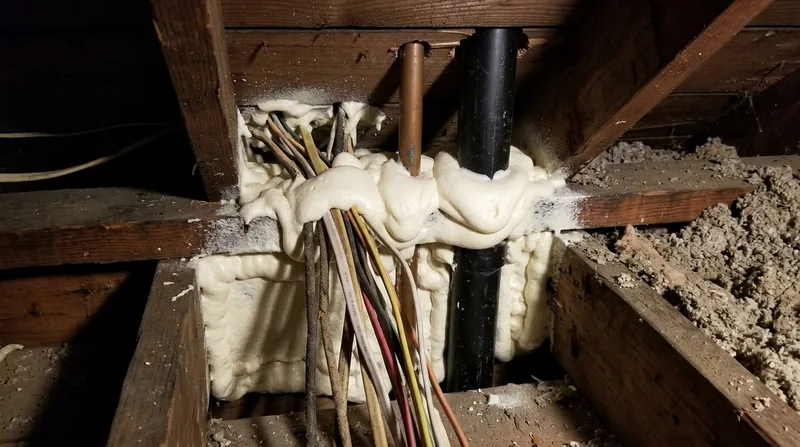




Duluth homes built into the hillside above Lake Superior face a relentless stack effect all winter long. Warm indoor air rises through top plates, rim joists, and every penetration it can find, carrying moisture and heat straight out of your attic while cold lake air pushes back against your walls. Air sealing in Duluth stops those leaks at the source, cutting drafts, reducing condensation risk, and lowering the heating load that drives energy bills higher than almost anywhere else in Minnesota. We locate and seal the gaps that fiberglass insulation alone cannot stop, using spray foam and mechanical air sealing techniques proven in cold climates like ours.
Why Air Sealing Matters in Duluth's Long, Cold Winters
In a city where heating season stretches from October through May and lake-effect snow loads push attic temperatures to extremes, the difference between a sealed envelope and a leaky one is measurable every month. Older homes in Lakeside and Hillside, with their plaster interiors and settled wall cavities, are especially vulnerable. Newer construction toward Hermantown and Proctor tightens the frame, but vented attics and rim joists still allow warm, moist interior air to escape whenever the stack effect activates. That air carries your heat and your money with it.
- We identify and seal air leaks around electrical penetrations, plumbing chases, and top plate gaps that standard insulation misses entirely.
- We stop warm interior air from pushing moisture into cold rim and band joists where condensation forms and wood begins to fail.
- We reduce the stack effect that pulls heated air upward and out through the attic plane during the heating season.
- We lower the load on your heating system, which translates directly to lower fuel consumption and lower monthly bills.
Air sealing is the single most cost-effective energy improvement in a cold climate because it addresses the root cause of heat loss: air movement, not conduction alone.
Key info: Homes in Duluth and Carlton built before 1980 often have settled wall cavities and open rim joists where condensation collects every winter. A homeowner in Proctor who seals the attic plane and band joist can expect to see heating bills drop noticeably by January. See our rim joist and band joist spray foam service for the entry point that addresses the coldest part of most homes.
For more context on building codes and ventilation requirements in your city, consult the Minnesota Building Code and Energy Code, which governs attic ventilation and air barrier requirements across St. Louis County.
How We Seal Air Leaks: The Process in Duluth Homes
Air sealing starts with a visual inspection of the attic plane, rim joist, and any other zones where conditioned air meets cold surfaces or outdoor exposure. We trace the air barrier, identify where it is broken, and use a combination of spray foam and mechanical sealants to restore continuity. In older Duluth homes, this often means sealing around plumbing vents, electrical boxes, and the rim joist band where the foundation meets the sill plate. In newer construction, we focus on top plate penetrations and any gaps left by framing.
- We inspect the attic, rim joist, basement band, and any other zone where warm indoor air can escape to the outside.
- We seal electrical penetrations, plumbing chases, and HVAC ductwork entry points with spray foam or compatible sealant.
- We close gaps along rim and band joists to prevent condensation and moisture accumulation in rim cavities.
- We verify that ventilation pathways remain open where required by code and that we do not seal off necessary air flow.
- We document what was sealed and the methods used so you have a record of the work.
The result is a continuous air barrier that stops the stack effect and keeps warm, moist interior air from escaping into cold zones where it will condense.
Local example: A 1970s home in Duluth with a plaster interior and original attic had a major cold draft along the east wall every winter. The rim joist was open to the rim cavity, and the attic had gaps around the electrical panel and plumbing vent stack. We sealed the rim joist with closed cell foam, sealed the electrical and plumbing penetrations in the attic, and re-sealed the top plate. The homeowner reported noticeably less draft and lower heating bills by mid-winter.
Air Sealing Methods and Materials
| Method | Description | Best for |
|---|---|---|
| Closed Cell Spray Foam | High-density foam applied as a liquid, expands and hardens, creates air and moisture barrier in one pass. | Rim joists, band cavities, attic penetrations where air and moisture control are both critical. |
| Open Cell Spray Foam | Lower-density foam, air-seals effectively, allows vapor transmission, easier to cut and work around. | Attic perimeter sealing, interior wall cavities, applications where vapor permeability is an advantage. |
| Caulk and Sealant | Polyurethane or silicone-based sealant applied with caulk gun, fills gaps and cracks without expansion. | Small penetrations, electrical boxes, gaps too narrow for foam, trim work and final sealing. |
| Weatherstripping and Tape | Mechanical air sealing using foam tape, weatherstripping, and rigid seals around ducts and vents. | Attic hatch covers, access doors, ductwork transitions, and areas where foam application is not feasible. |
Most air sealing jobs in Duluth combine closed cell foam for high-risk zones like rim joists with open cell foam or caulk for attic penetrations and smaller gaps. We choose the method based on moisture risk, access, and code requirements at your address. See our closed cell spray foam service for details on the high-performance option, and our open cell spray foam service for the cost-friendly alternative.
Air Sealing Cost in Duluth: What to Expect
Air sealing pricing depends on the size of the area to be sealed, the method required, and the difficulty of access. A straightforward attic penetration sealing might start at $650 and scale upward based on the number of penetrations, the size of the rim joist zone, and whether existing insulation needs to be removed first. A full rim joist sealing in a 1,500-square-foot basement will cost more than sealing a single attic plane. The best way to know is to get a written estimate with R-value and thickness specifications so you can compare apples to apples.
- Attic penetration sealing (electrical, plumbing, HVAC) typically starts at $650 for a small home and scales with the number of penetrations.
- Rim joist sealing runs higher because the area is larger and moisture risk is greater, usually $1,200 to $2,500 depending on the linear footage.
- Combination jobs that seal both attic and rim joist together often cost less per square foot than separate visits.
- Travel is included in our estimate for Duluth and surrounding areas, so there are no surprise mileage fees.
The most common mistake homeowners make is comparing a low estimate from a fly-by operator against a detailed estimate from a local contractor. A low price often means no R-value spec, no thickness guarantee, no mechanical ventilation during cure, and no recourse when the smell does not go away. We provide written estimates with specifications so you know exactly what you are paying for. Call us at (218) 241-4881 to request a free estimate, and ask any contractor you interview for the same detail. See our full pricing overview for more context on how we structure estimates across all services.
Air Sealing Near Me: What Duluth Homeowners Should Know Before Hiring
Air sealing is a small-ticket service, but it is also a credibility test. Any contractor can spray foam into an attic; the ones who take the time to seal air leaks correctly are the ones who understand the trade. Before you hire, ask these questions: Does the estimate include R-value and thickness specifications? Will they provide mechanical ventilation during the cure period? Do they offer a re-entry window and explain what that means? Can they verify their insurance coverage? Are they willing to inspect the work when it is done? These are not optional questions, they are the markers of a professional.
- Verify that any contractor carries full insurance and can provide a current certificate of insurance before work starts.
- Get estimates from at least two local contractors so you can compare methods, materials, and price on the same basis.
- Ask about permits: air sealing itself rarely requires a permit, but if your home is in an HOA or a heritage district, verify what applies to your address.
- Check references from recent jobs in your neighborhood, especially if the work involves rim joist or basement band sealing.
- Confirm that the contractor will not spray over wet substrates, active leaks, or contaminated surfaces, and will walk away if conditions are not right.
If you are ready to move forward, contact us for a free estimate or call (218) 241-4881. We will inspect your attic and rim joist, explain what we find, and give you a written estimate with no obligation to book.
Air Sealing in Duluth: Pricing Guide
| Service | Price | Details |
|---|---|---|
| Attic penetration sealing | Starting at $650 | Sealing electrical boxes, plumbing vents, HVAC chases in attic plane, scales with number of penetrations. |
| Rim joist and band sealing | Starting at $1,200 | Closed cell foam applied to rim cavity and band joist, price depends on linear footage and foundation type. |
| Combination attic and rim sealing | Starting at $1,800 | Full air barrier sealing in both attic and basement band, often lower per-square-foot than separate visits. |
| Large-scale or complex project | On estimate | Multi-zone sealing, existing insulation removal, or moisture remediation requires on-site inspection before pricing. |
| Travel | Included | No separate mileage fee for Duluth, Hermantown, Proctor, and surrounding St. Louis County areas. |
| Free estimate | No charge | Written estimate with specifications, response within 24 hours at (218) 241-4881, no obligation. |
Indicative pricing, the exact cost depends on square footage, finish, and site access. Free personalized estimate within 24h at (218) 241-4881.


