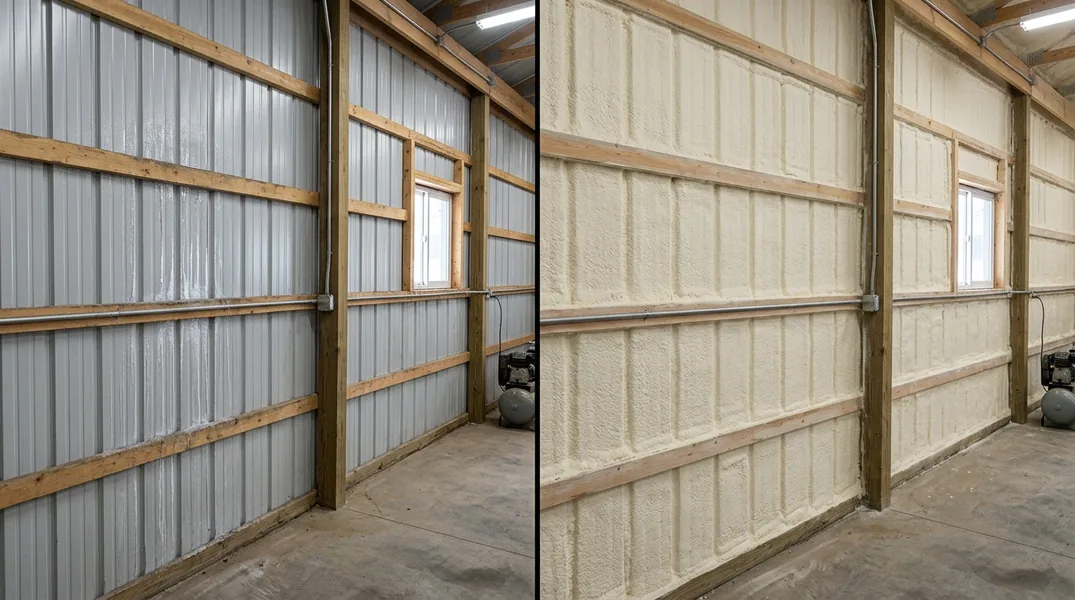
Understanding Fieldstone Foundations in Central Hillside Duluth Homes
Central Hillside is one of Duluth's most charming neighborhoods, characterized by historic homes built on solid fieldstone foundations. These beautiful masonry walls tell a story of craftsmanship and durability, but they also present unique insulation challenges that modern homeowners must address. Fieldstone, while structurally sound, is porous and lacks the thermal resistance of contemporary building materials. This means heat loss through foundation walls can account for a significant portion of your home's energy bill, especially during long Minnesota winters.
Many homeowners in Central Hillside are discovering that traditional insulation methods don't work well with fieldstone walls. Fiberglass batts and rigid foam boards can trap moisture against the stone, leading to mold, efflorescence, and structural damage over time. This is where spray foam insulation offers a compelling alternative. Unlike conventional materials, spray foam adheres directly to fieldstone surfaces and creates an air-tight seal that prevents both heat loss and moisture infiltration. Understanding this distinction is crucial before making an investment in your home's thermal performance.
Is Spray Foam Insulation Worth It for Your Foundation Walls
When evaluating whether spray foam insulation is worth the investment, homeowners need to consider both immediate and long-term benefits. Closed Cell Spray Foam Insulation delivers an R-value of approximately 6.5 to 7 per inch, which is significantly higher than fiberglass (3.2 to 3.8 per inch) or mineral wool (3.2 to 3.8 per inch). For fieldstone foundation walls in Duluth, this means you can achieve superior thermal resistance with less material thickness, preserving valuable basement space while dramatically improving comfort.
The energy savings alone can justify the expense. Homeowners typically see heating cost reductions of 15 to 20 percent after insulating foundation walls, and these savings compound year after year. Beyond energy efficiency, spray foam provides air sealing that reduces drafts, prevents pest infiltration, and eliminates cold spots that plague older homes. When you factor in improved comfort, lower utility bills, and increased property value, the return on investment becomes clear. Many homeowners find that the payback period is five to seven years, after which they enjoy pure savings. To understand the specific value for your home, contact Duluth Spray Foam Insulation at (218) 241-4881 for a personalized assessment.
Spray Foam Insulation Pros and Cons: A Balanced Look
Like any building material, spray foam insulation has distinct advantages and limitations. On the positive side, it offers superior thermal performance, creates an effective air barrier, resists moisture intrusion, and provides excellent coverage in irregular spaces like fieldstone walls. It's also a durable solution that doesn't settle or degrade like traditional insulation, meaning your R-value remains constant for decades. For basements prone to dampness, spray foam's moisture-resistant properties are particularly valuable.
However, spray foam insulation does have drawbacks worth considering. The upfront cost is higher than fiberglass or mineral wool, which can be a barrier for budget-conscious homeowners. Installation requires specialized equipment and trained technicians, so DIY isn't an option. Some homeowners also express concerns about spray foam off-gassing, chemical sensitivity, and whether spray foam insulation is safe for occupied homes. Additionally, if you ever need to modify walls or run new electrical lines, cutting through spray foam is more challenging than working with traditional batts. Understanding these trade-offs helps you make an informed decision aligned with your priorities and budget.
Is Spray Foam Insulation Safe: Addressing Health and Safety Concerns
Safety is a legitimate concern when considering spray foam for your home. The good news is that when installed properly by certified professionals, spray foam insulation is safe for occupants. The two-part chemical reaction that creates the foam occurs during application, and once cured, the material is inert and poses no ongoing health risk. Professional installers follow strict safety protocols, including proper ventilation, personal protective equipment, and post-application curing time before homes are reoccupied. Reputable companies like Duluth Spray Foam Insulation ensure all work meets or exceeds industry standards and local building codes.
The key safety consideration involves the application process itself. During spraying, workers and nearby residents should vacate the area to avoid exposure to isocyanates and other reactive chemicals. After application, the foam must cure properly, typically 24 hours, before the space is safe for occupancy. Some homeowners with chemical sensitivities may experience temporary discomfort from residual odors, which brings us to the off-gassing question. Modern spray foams have significantly reduced off-gassing compared to older formulations, and Open Cell Spray Foam Insulation generally off-gasses less than closed-cell varieties. If you have health concerns, discuss them directly with your contractor before scheduling work.
Understanding Spray Foam Off-Gassing and Chemical Concerns
Spray foam off-gassing refers to the release of volatile organic compounds (VOCs) after installation. This is a real phenomenon, though modern products have made significant improvements. The most common off-gassing occurs in the first few days to weeks after application, with odors typically dissipating within a month. The intensity and duration depend on the foam type, application thickness, ventilation, and temperature. Closed-cell spray foam tends to off-gas more than open-cell varieties, though both are considered safe once properly cured. If you're sensitive to chemical odors, open-cell foam may be a better choice, or you might consider Wall & Injection Foam Insulation for existing walls, which involves less active chemical exposure during installation.
To minimize off-gassing concerns, ensure your contractor follows best practices: proper ventilation during and after application, adequate curing time before reoccupancy, and use of low-VOC or eco-friendly foam products when available. Many modern spray foams are formulated with water-blown technology rather than chemical blowing agents, reducing environmental impact and off-gassing. Asking your contractor about their foam's specific formulation and VOC content is perfectly reasonable. These conversations help you understand exactly what's going into your home and what to expect during and after installation.
Spray Foam Insulation Problems: What Can Go Wrong
While spray foam is generally reliable, certain problems can occur if installation isn't handled correctly or if the product isn't suited to your specific application. Poor application can result in incomplete coverage, voids, or uneven density, all of which reduce effectiveness. Over-application can create excessive pressure on walls, potentially causing structural issues. Improper mixing of two-part foams leads to incomplete curing and reduced performance. Additionally, spray foam applied to wet surfaces or in high-humidity conditions may cure improperly and trap moisture, defeating the purpose of insulation and potentially causing mold growth.
Another concern involves compatibility with certain building materials. Some homeowners experience issues when spray foam is applied over certain paints or sealers that prevent proper adhesion. In rare cases, spray foam can interact negatively with certain insulation materials already present in walls, though this is uncommon. The best way to avoid these problems is hiring experienced, certified professionals who understand local building conditions and best practices. In Duluth, where humidity and moisture are significant factors, choosing contractors familiar with regional challenges is essential. When you're ready to move forward, Duluth Spray Foam Insulation can provide a free estimate and answer specific questions about your foundation walls.
Getting Started with Spray Foam for Your Central Hillside Foundation
If you've decided that spray foam insulation makes sense for your fieldstone foundation walls, the next step is connecting with qualified local professionals. The process typically begins with an in-home assessment where contractors evaluate your foundation's condition, moisture levels, existing insulation, and specific thermal challenges. This inspection helps determine whether closed-cell or open-cell foam is best suited to your situation, and what pricing you can expect for your project. Professional contractors will also identify any moisture issues that must be addressed before insulation is applied, ensuring your investment performs as intended.
Duluth Spray Foam Insulation serves homeowners throughout the region and understands the unique challenges of Central Hillside properties. With experience working on historic fieldstone foundations and modern energy-efficient upgrades, the team can recommend solutions tailored to your home and budget. Whether you're concerned about energy bills, basement comfort, or moisture problems, spray foam insulation offers a proven solution. Reach out today at (218) 241-4881 to discuss your foundation insulation needs and receive a personalized recommendation. Your path to a warmer, more efficient home starts with a simple conversation.
Looking for a professional spray foam insulation contractor in Duluth? Duluth Spray Foam Insulation responds fast for all your spray foam insulation needs.
Get a Free Quote