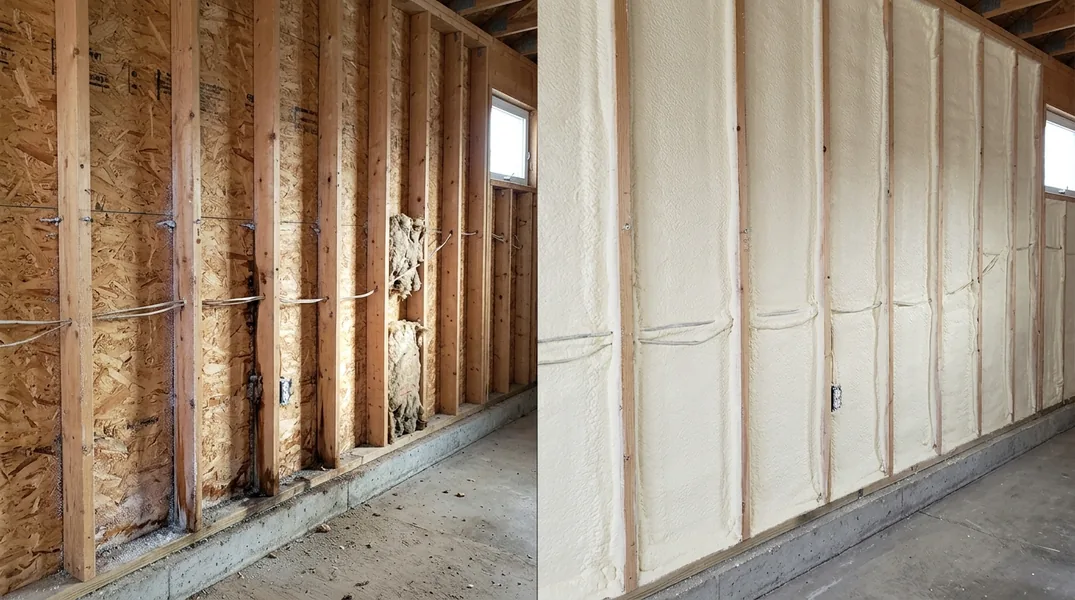
Understanding Climate Zone 7 and Duluth's Unique Insulation Challenge
Living in Duluth means understanding that your home faces insulation demands most of the country never encounters. Climate Zone 7 is characterized by extremely cold winters, significant temperature swings, and moisture challenges that come with proximity to Lake Superior. The winter design temperature in Duluth regularly drops to minus 20 degrees Fahrenheit or colder, and Lake Superior's influence creates unique moisture patterns that traditional insulation simply cannot handle effectively.
When homeowners in the region rely on conventional fiberglass or cellulose insulation, they often discover that these materials fail to perform as advertised. Fiberglass loses R-value as temperatures drop, and both fiberglass and cellulose absorb moisture from the humid lake air, which compromises their insulating ability and creates conditions for mold and rot. This is where the insulation math changes dramatically. In Climate Zone 7, the equation isn't just about R-value numbers on a specification sheet. It's about real-world performance under extreme stress, moisture resistance, and long-term durability. Your insulation choice directly impacts your heating bills, comfort levels, and the structural integrity of your home.
Why Crawl Space Insulation Matters More in Cold Climates
Many homeowners overlook their crawl spaces, but in Climate Zone 7, this is where energy loss begins. A poorly insulated crawl space acts like an open door to the cold, allowing winter air to seep into your living spaces and forcing your heating system to work overtime. Duluth homes built on piers and beams are especially vulnerable because the space beneath the first floor is directly exposed to outdoor temperatures and ground moisture.
The best insulation for crawl space applications in our region must address two critical challenges simultaneously: thermal resistance and moisture control. Traditional crawl space insulation using fiberglass batts fails on both counts. Batts sag under their own weight when exposed to moisture, they don't create an air seal, and they allow cold air to bypass them entirely. In contrast, crawl space spray foam creates a continuous thermal and moisture barrier that eliminates thermal bridging and air leakage. This is the fundamental reason why spray foam has become the preferred solution for homeowners serious about energy efficiency in Climate Zone 7.
Closed Cell vs. Open Cell: Which Spray Foam Wins in Lake Superior Country
Closed Cell Spray Foam Insulation and Open Cell Spray Foam Insulation are not interchangeable products, and the climate zone you live in determines which one makes sense for your home. Closed cell foam has a higher R-value per inch (approximately 6.0 to 7.0 R-value per inch) and is inherently moisture resistant because its cellular structure is impermeable. This makes it the superior choice for crawl spaces, basements, and any below-grade application in Duluth where ground moisture and humidity are constant concerns.
Open cell foam, while less expensive and offering some advantages in certain applications, is vapor permeable and has a lower R-value per inch (around 3.5 to 4.0). In Climate Zone 7, open cell foam should generally be reserved for interior wall cavities where it won't be exposed to exterior moisture and where its lower cost can be justified. For crawl spaces and pier and beam applications, closed cell is the clear winner. It provides superior moisture resistance, higher thermal performance, and the durability required to withstand Duluth's harsh environment for decades. When you're investing in insulation in a climate as demanding as ours, choosing closed cell foam means you're choosing long-term protection over short-term savings.
Pier and Beam Insulation: The Overlooked Energy Drain
Homes built on pier and beam foundations are common in older neighborhoods throughout Duluth and surrounding areas like Hermantown. These foundations offer certain advantages, but they also create a significant insulation challenge that many homeowners don't fully appreciate. The open space beneath the home is essentially an unconditioned zone that's directly connected to your living space above. Cold air naturally rises, and in winter, this means your floors stay cold and your heating system must work harder to maintain comfort.
Pier and beam insulation using spray foam transforms this liability into a properly conditioned space. When applied to the underside of the floor joists or to the perimeter band board, spray foam creates an air seal that prevents cold air infiltration and maintains consistent floor temperatures. This isn't just about comfort, though warm floors in winter are certainly appreciated. It's about efficiency. Studies show that properly insulating a pier and beam crawl space can reduce heating costs by 10 to 15 percent, which translates to hundreds of dollars annually in a climate as cold as ours. Combined with moisture control benefits, spray foam insulation for pier and beam foundations is one of the highest-ROI improvements you can make to an older home in Climate Zone 7.
The Moisture Control Advantage: Why Spray Foam Protects Your Home
Lake Superior's proximity to Duluth creates humidity levels that challenge traditional insulation materials. In winter, warm interior air meets cold exterior surfaces, and without proper moisture control, condensation forms inside walls and crawl spaces. This moisture promotes mold growth, wood rot, and structural damage that can cost tens of thousands of dollars to remediate. Closed Cell Spray Foam Insulation addresses this challenge directly because its dense cellular structure resists moisture penetration and doesn't absorb water like fiberglass or cellulose.
When spray foam is properly applied to crawl space walls and floors, it creates an effective vapor barrier that prevents moisture from entering the insulation system. This is critical in Climate Zone 7, where the temperature differential between inside and outside can exceed 50 degrees Fahrenheit for months at a time. Fiberglass insulation, by comparison, absorbs moisture readily and loses its insulating value when damp. Over time, this moisture accumulation leads to mold, mildew, and the musty odors that plague many older homes in the region. By choosing spray foam, you're not just improving your home's thermal performance. You're protecting its structural integrity and creating a healthier indoor environment for your family.
Getting Professional Help: Spray Foam Insulation Near Me in Duluth
Installing spray foam insulation is not a DIY project. It requires specialized equipment, proper safety protocols, and expertise in building science to ensure optimal performance. The application process demands precision, and mistakes can result in incomplete coverage, improper curing, or safety hazards. If you're considering upgrading your crawl space, pier and beam foundation, or other areas of your home, working with local professionals who understand Climate Zone 7's unique demands is essential.
Duluth Spray Foam Insulation has been serving homeowners throughout the region with expert installation and honest guidance about which insulation solutions make sense for their specific situations. Whether you need Closed Cell Spray Foam Insulation for your crawl space, Wall & Injection Foam Insulation for existing walls, or comprehensive attic work, our team understands the technical requirements and practical challenges of insulating homes in this region. We can provide a detailed assessment of your home's current insulation performance and recommend solutions that align with your budget and goals. Call us at (218) 241-4881 or request a free estimate to discuss your project with a local expert who knows exactly what it takes to keep a home comfortable and efficient in Climate Zone 7.
Looking for a professional spray foam insulation contractor in Duluth? Duluth Spray Foam Insulation responds fast for all your spray foam insulation needs.
Get a Free Quote